
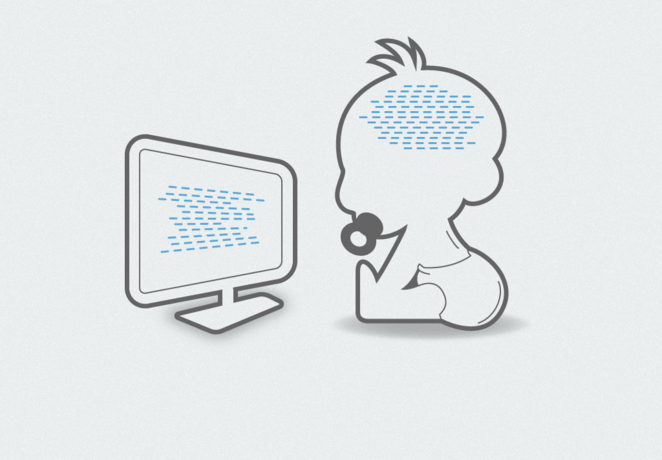
If your child is under 2, stop letting them watch TV. A new report from the American Academy of Pediatrics says TV or videos can harm an infant’s development, even delay the ability to speak.
Instead of allowing infants to passively watch moving images, parents should talk to them and encourage independent play, the AAP said.
The guidelines were needed because of the proliferation of DVDs targeted at the under-2 age group, said Dr. Ari Brown, a pediatrician in Austin, Texas, who is a member of the academy and the lead author of the report. He said an example is the Disney-owned “Baby Einstein” collection, which includes titles such as “Baby Van Gogh: World of Colors” and “Baby Beethoven Symphony of Fun.”
Children under 2 are too young to be able to understand the images on the screen, even if they’re from so-called educational videos, the report said.
If your child is under two years old, it may be time to reconsider screen exposure.
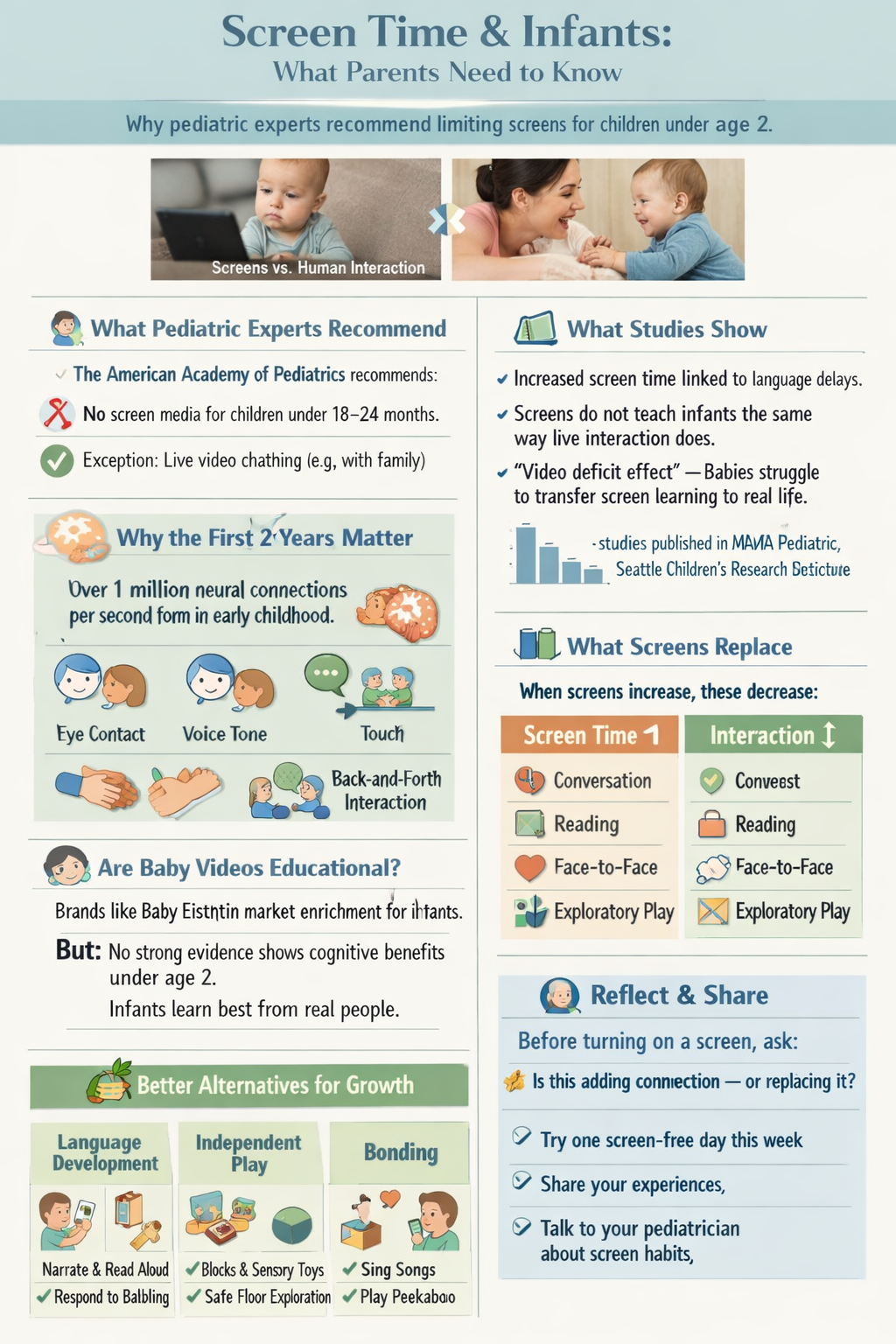
According to the American Academy of Pediatrics (AAP), screen media — including television, videos, and “educational” programming — can interfere with healthy infant development, particularly language acquisition and social interaction.
What the Research Says
The AAP has consistently recommended avoiding screen media for children younger than 18–24 months, except for video chatting. Why?
- Studies have shown that infants learn language best through live human interaction, not passive viewing.
- Research published in peer-reviewed pediatric journals has linked early screen exposure to delays in expressive speech.
- A 2017 study in JAMA Pediatrics found that increased screen time at age 2 was associated with poorer performance on developmental screening tests at age 3.
Dr. Ari Brown, a pediatrician and contributor to AAP policy, has emphasized that infants’ brains are rapidly developing and require responsive, back-and-forth engagement — something screens cannot provide.
Similarly, developmental psychologist Dr. Dimitri Christakis of the Seattle Children’s Research Institute has noted that infants struggle to transfer what they see on a 2D screen into real-world understanding — a phenomenon known as the “video deficit effect.”
In simple terms: babies don’t learn from screens the way they learn from people.
Why It Matters
During the first two years of life, the brain forms over one million neural connections per second. These connections are strengthened through:
- Eye contact
- Facial expressions
- Tone of voice
- Physical touch
- Responsive conversation
A screen cannot respond to a baby’s babbling.
It cannot pause when confusion appears on their face.
It cannot adjust tone when comfort is needed.
Human interaction wires the brain for language, empathy, and regulation.
But What About “Educational” Videos?
Programs such as Baby Einstein were marketed as enriching tools for infants. However, the AAP reports that there is no credible evidence that these programs improve cognitive outcomes for children under two.
In fact, the concern is not just what children watch — but what screen time replaces:
- Conversation
- Floor play
- Exploration
- Reading together
When screens substitute interaction, development may slow.
Practical Alternatives for Parents
If the goal is to nurture growth, here are evidence-supported alternatives:
For Language Development
- Narrate your day (“Now we’re putting on your socks…”)
- Read board books daily
- Respond enthusiastically to babbling
For Independent Play
- Provide simple sensory toys (blocks, textured balls, stacking cups)
- Create a safe floor space for exploration
- Rotate toys to maintain curiosity
For Connection
- Sing songs with gestures
- Practice face-to-face play
- Engage in peekaboo or imitation games
These activities may seem simple — but simplicity is powerful at this stage.
A Question for Parents
How has screen time — or the absence of it — shaped your child’s behavior, sleep, or communication?
Have you noticed differences when interaction increases and screens decrease?
Your experience matters. Parenting in a digital age is complex, and shared insights can help others make informed choices.
Final Reflection
Screens are not inherently harmful. They are tools.
But in the first two years of life, the most advanced “technology” your child needs is you.
Before handing over a device, pause and ask:
Is this adding connection — or replacing it?
If this resonates with you, take a moment today to swap one screen session for one intentional interaction — and notice the difference.
 Our Days & Futures
This iss a great post thanks
LikeLiked by 1 person
Thanks Hillary
LikeLike