

The freshman 15 won’t make you fat after all. Despite all of those late-night pizzas, beers and cafeteria buffets, no more than 10% of college freshmen gain 15 pounds or more.
When economics professor Jay Zagorsky mistakenly got a postcard meant for incoming first-year students, warning him that he was going to gain 15 pounds and should join the school gym, he wondered, “Is the ‘freshman 15’ real?”
Using data from a nationwide study of 7,000 people, Zagorsky found that it is not. His discovery refutes years of myths and mothers’ warnings that enrolling in college amounts to about the same results as chain-eating Snickers.
According to the report, freshmen gain only an average of 2.4 pounds for women and 3.4 for men, far below the dreaded 15.
So I am not going to compare 2011 stats to my college students now in Mexico. I am not even going to cry a river about me getting fatter. What came to my mind was another generational shift: Reading. I was thinking about how to respond to a student. The student asked me to clarify the instructions for an assignment. My hot take is that it is not true that our youth are not reading. I think we, who have a little more experience, don’t take the time or chances to share. When we do, we trigger curiosity. It is that missing piece that pushed me to read, and I bet it would help them going digging too.
Oh, yeah here’s my response to her question:
Mexico’s art history is incredibly diverse, spanning from ancient indigenous codices to the massive murals of the 20th century. Here are three of the most iconic and influential examples:
1. The Two Fridas (Las dos Fridas) – Frida Kahlo (1939)
This is perhaps Kahlo’s most famous oil painting. Completed during her divorce from Diego Rivera, it features two versions of herself sitting side-by-side: one in a traditional European dress and the other in a Tehuana skirt.
Significance: It represents her dual heritage and her emotional struggle. The two Fridas are connected by a single vein that is being cut by surgical scissors, symbolizing her pain and isolation.
Where to see it: Museo de Arte Moderno, Mexico City. Google Arts & Culture – The Two Fridas: https://artsandculture.google.com/asset/the-two-fridas-frida-kahlo/zAHG4EZ1WrwVYg
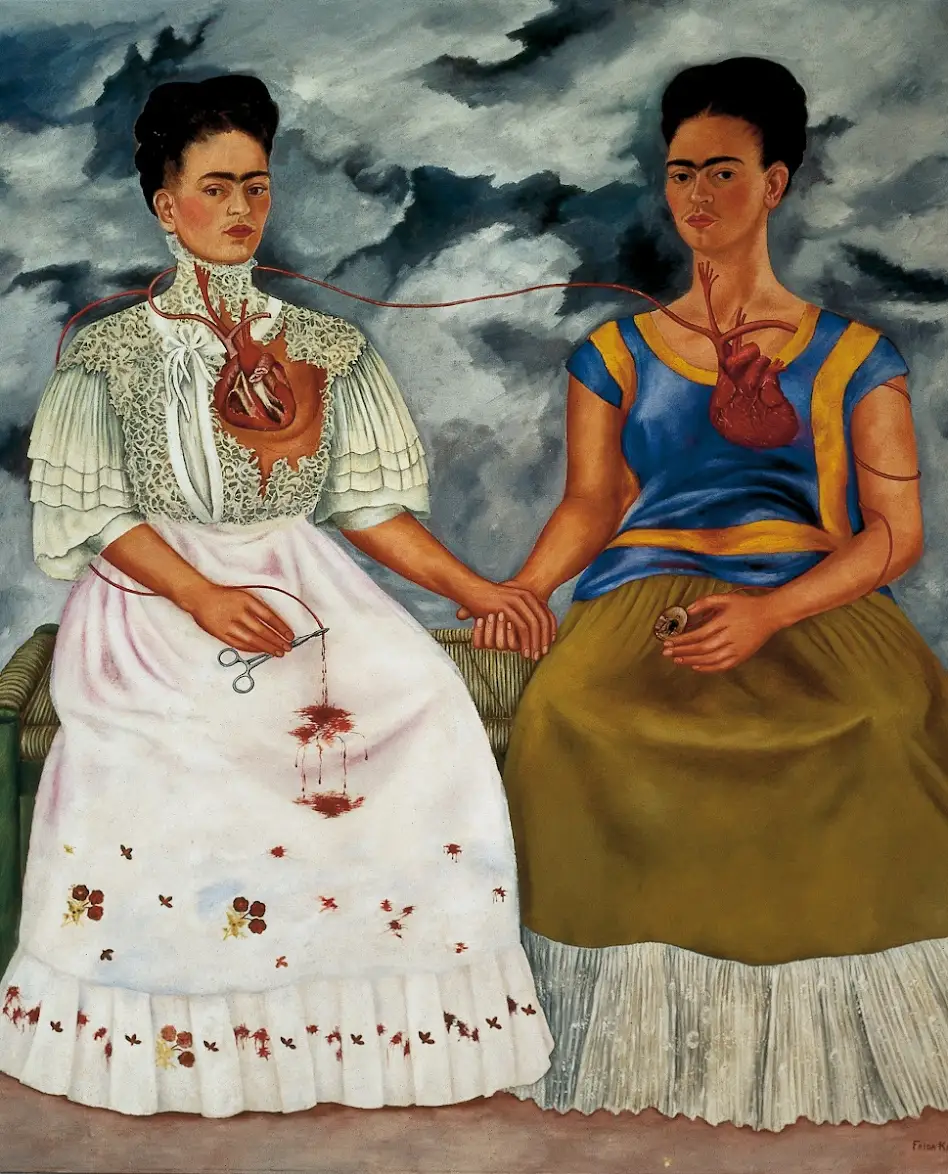
This entry from the Museo de Arte Moderno allows you to see the intricate details of the lace and the exposed hearts.
2. The History of Mexico – Diego Rivera (1929–1935)
This massive mural covers the stairways and hallways of the National Palace. It is a sweeping visual narrative that spans from the pre-Hispanic era and the Spanish Conquest to the Mexican Revolution and a future socialist vision.
Significance: Rivera sought to “alphabetize” the public through art, creating a shared national identity by celebrating indigenous roots and the struggles of the working class.
Where to see it: Palacio Nacional, Mexico City. Google Arts & Culture – A History of Mexican Mural Painting: https://www.google.com/search?q=https://artsandculture.google.com/story/a-history-of-mexican-mural-painting/KQEzYaXcQ118gg
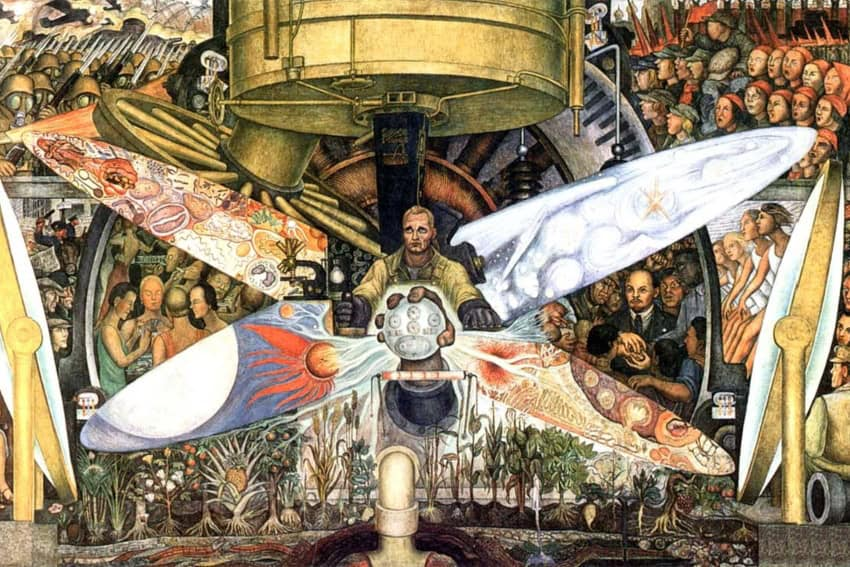
While the National Palace doesn’t have a single “click-to-view” link for the entire stairwell, this curated story provides high-definition captures of the different sections of Rivera’s masterpiece. Khan Academy – Visual Breakdown: https://www.khanacademy.org/humanities/art-1010/latin-america-modernism/mexican/a/the-history-of-mexico-diego-riveras-murals-at-the-national-palace
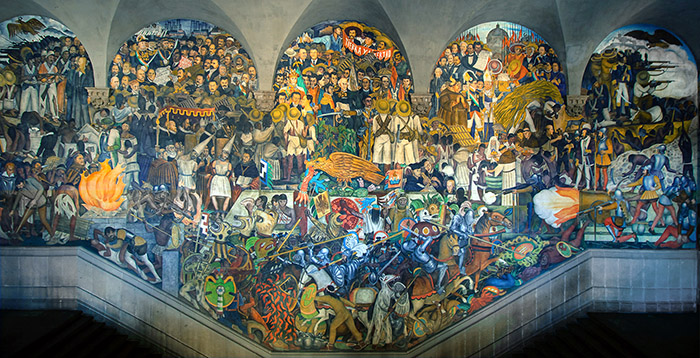
This is excellent for seeing the specific “North,” “West,” and “South” walls with academic annotations.
3. Man of Fire (Hombre en Llamas) – José Clemente Orozco (1939)
Often called the “Sistine Chapel of Latin America,” this fresco is located in the dome of a former hospital and orphanage. It depicts a central figure consumed by flames, surrounded by four other figures representing the elements.
Significance: Unlike the more optimistic murals of Rivera, Orozco’s work is often raw and critical. Man of Fire is interpreted as a symbol of human sacrifice, social renewal, and the promethean struggle for enlightenment.
Where to see it: Hospicio Cabañas, Guadalajara. Google Arts & Culture – El Hombre de Fuego: https://artsandculture.google.com/asset/el-hombre-de-fuego-acercamiento-jos%C3%A9-clemente-orozco/RQEd67EOF2_ung
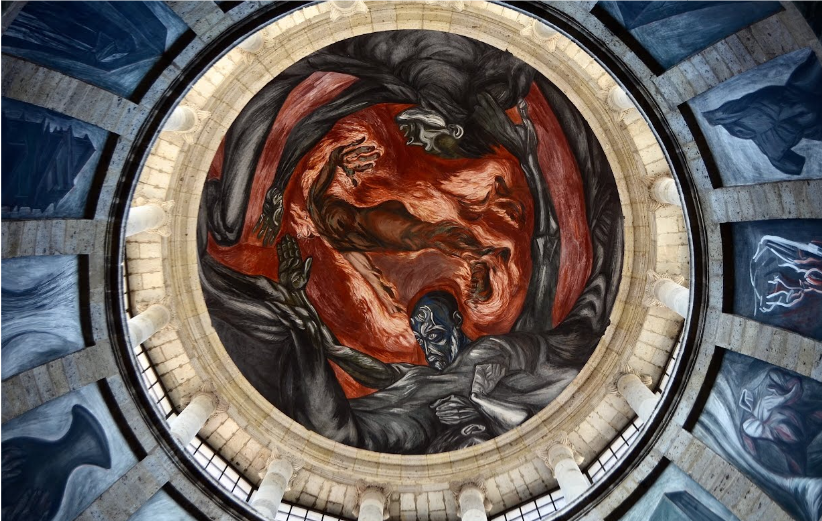
This link provides a stunning “up-close” look at the fresco inside the dome of the Museo Cabañas. Museo Cabañas – Official Mural Gallery: https://museocabanas.jalisco.gob.mx/en/inicio-english/
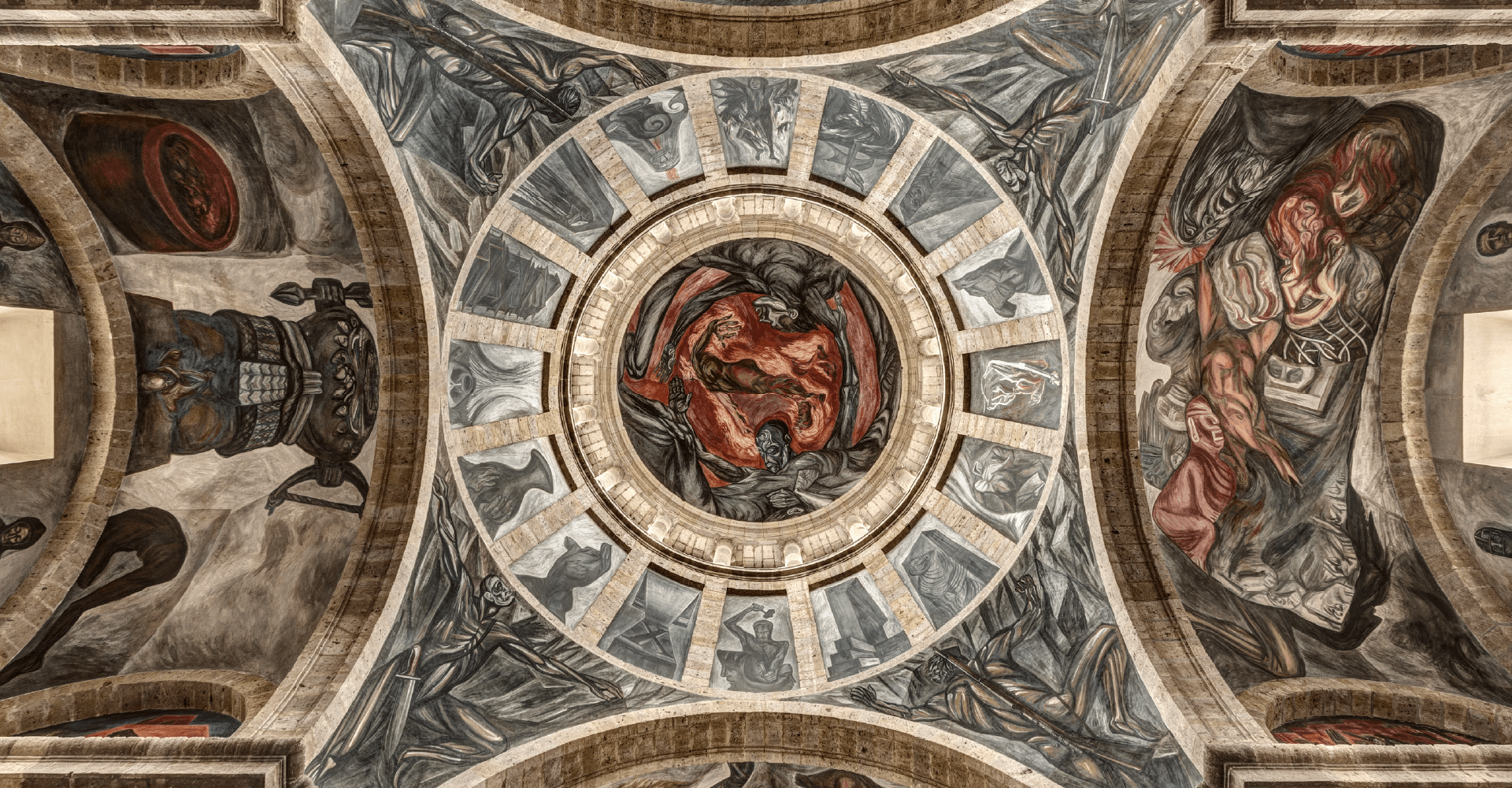
You can browse through their digital collection to see the other 56 frescoes that surround the central Man of Fire.
Honorable Mention: La Calavera Catrina
While originally a zinc etching by José Guadalupe Posada (1913), this “Elegant Skull” has become the definitive symbol of Mexico’s Day of the Dead. It was later popularized in color by Diego Rivera in his mural Dream of a Sunday Afternoon in the Alameda Central. Google Arts & Culture – La Catrina: https://artsandculture.google.com/asset/la-catrina-jos%C3%A9-guadalupe-posada/XgGIMPc3XjHC8w
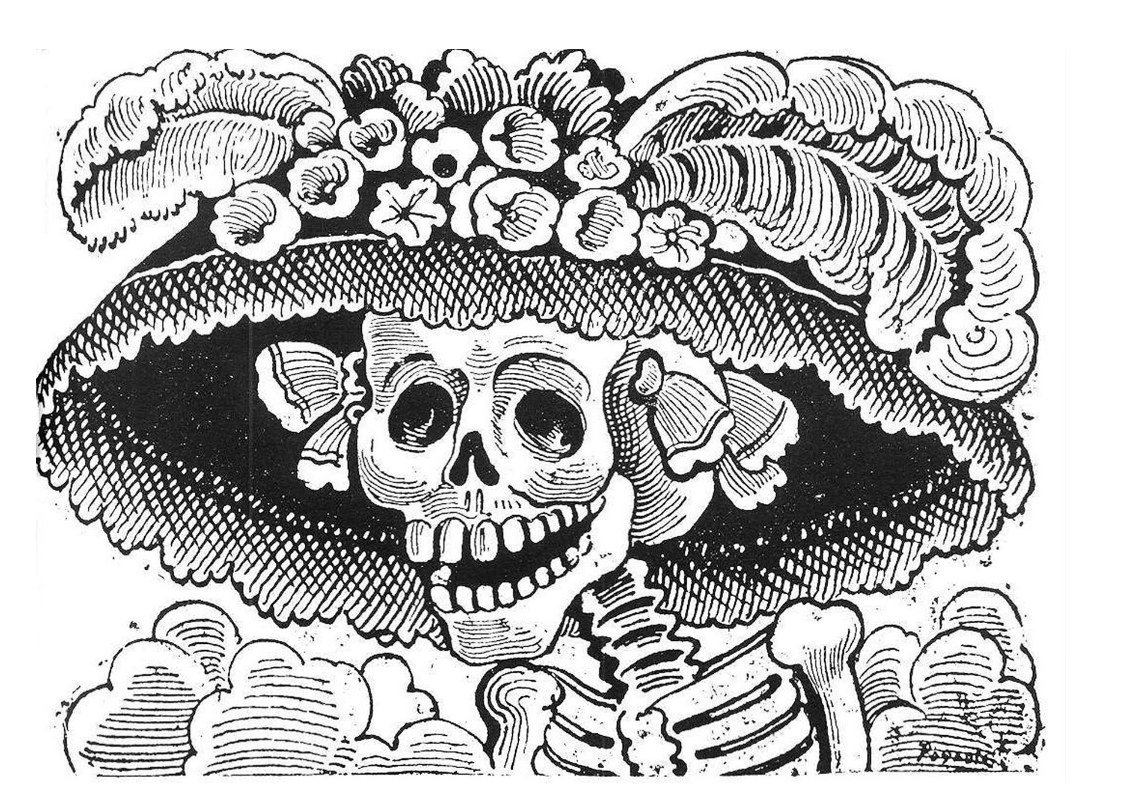
An excellent high-res version of the original zinc etching. New York Public Library – Posada Collection: https://www.nypl.org/events/exhibitions/posada
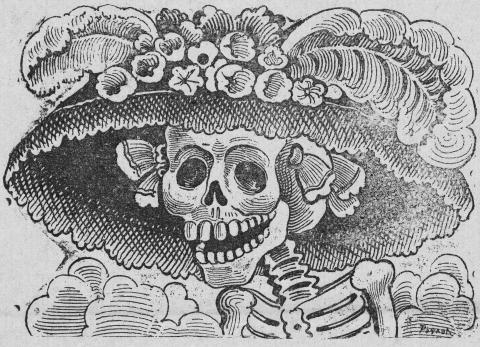
Since you’re looking for the original prints, the NYPL holds one of the largest digital archives of Posada’s “calaveras.”
 Our Days & Futures